MRI and skeletal findings

Skeletal changes and MRI

Skeletal changes on MRI may involve abnormalities in the bone marrow, joints, surrounding soft tissues or structures close to the skeleton. Whole body MRI may show certain changes that need to be assessed further, but in cases of clear injury, local pain or suspected fracture, targeted examination is often required.

Skeleton and soft tissues

When MRI can provide information about skeletal changes

MRI is particularly sensitive to soft tissue, bone marrow, and changes near the skeleton. This distinguishes the method from regular X-rays, which are often used in cases of suspected fractures or obvious bone damage.

A full-body MRI examines the skeleton and nearby structures in a broader context. The examination may provide signals that something needs to be followed up, but it does not always replace targeted orthopedic or emergency evaluation.

Important concepts

Bone marrow
Soft parts
Near-skeletal findings
I
Suspicion of tumor
Damage
Radiolog
Follow-up
How the Process Works

From booking to medical response

You book the examination privately without a referral. After the MRI examination, the images are reviewed by a radiologist, compiled in a written report and reviewed with a specialist doctor so that you receive clear guidance on any follow-up.

1

Book privately without a referral

You choose full-body MRI and book the examination directly through Prevcare without first needing a referral.

2

Perform the MRI examination

The examination is carried out in a clinic according to a fixed protocol where several organs and body parts are examined with an MRI camera.

3

Get report and medical review

The images are reviewed by a radiologist. You will receive a written report, a review with a specialist and a referral if necessary.

Full body MRI and medical assessment

Skeletal findings often need targeted follow-up

Skeletal changes need to be interpreted based on symptoms, age, previous injuries, training load and medical history. MRI can provide important information, but the choice of examination depends on the question.

What are skeletal changes on MRI?

Skeletal changes on MRI can mean many different things. They can be changes in the bone marrow, inflammatory signals, degenerative changes, older injuries, cyst-like areas, soft tissue involvement, or other abnormalities that the radiologist describes in the report.

Not all skeletal changes are serious. Many are age-related, strain-related or benign. Others may need to be followed up with targeted imaging, blood tests, clinical examination or specialist assessment.

Whole-body MRI may show certain skeletal-related findings as part of a broad review, but the examination is not intended to replace targeted investigation of a specific joint, spinal level, or suspected fracture.

  • MRI can show bone marrow and soft tissue changes.
  • Findings may be benign, age-related, or require follow-up.
  • In the case of local pain, targeted MRI is often more accurate.
  • In the case of acute injury, other acute diagnostics are often used.

What can MRI show?

MRI can show signals in bone marrow and soft tissues that are not always visible on regular X-rays. This may include inflammation, edema, soft tissue changes near the skeleton, or certain findings that are suspicious for tumors.

With a full-body scan, the assessment is broad. The radiologist doesn't just look for a specific problem, but examines several areas to see if anything abnormal needs to be described.

If a finding requires more detailed assessment, the next step may be targeted MRI, CT, X-ray, laboratory tests or contact with a specialist. Therefore, the post-examination review is an important part of the overall process.

When might it be relevant?

Full-body MRI may be relevant if you want to examine the body broadly and at the same time have skeletal areas included in the examination. It may be suitable for preventive examinations or when you want a broader medical picture.

It may also be relevant if you are concerned about a general illness or want to discover unexpected findings that need to be followed up. In that case, the value is not just the imaging, but that the findings are assessed by a radiologist and explained by a doctor.

However, in the event of clear local pain, suspected injury or discomfort from a specific joint, a targeted examination is often better.

What can full-body MRI not replace?

Whole body MRI does not replace acute assessment after a fall, trauma or suspected fracture. In acute injuries, plain X-ray or CT are often used depending on the situation, as these methods can quickly show skeletal damage.

The examination also does not replace a targeted MRI of the knee, hip, shoulder, back or other specific body part when the symptoms are clearly local. A targeted protocol provides more detailed information about that particular area.

It is therefore important to choose a survey according to the question. Broadness is good for an overview. Precision is required for clear local problems.

Price and booking

You can find the current price and booking on the page for full-body MRI . The price includes a radiological report, a review with a specialist and a referral if necessary.

If skeletal-related findings appear in the report, you will receive guidance on whether they need to be followed up or whether they are likely to be of no immediate significance.

In case of severe pain or injury

In the event of a fall, accident, severe pain, swelling, inability to bear weight, or suspected fracture, you should seek medical attention immediately. A full-body MRI is a planned examination and is not the right course of action for acute injuries.

Also seek medical attention for bone pain that gets worse quickly, nighttime pain, fever, or a clear impact on your general condition.

Acute injuries should be assessed immediately.

Do not wait for a private full-body MRI in case of suspected fracture, trauma or rapidly increasing pain.

Private investigation

Book a full-body MRI without a referral

Book a private full-body MRI without a referral via Prevcare. The examination provides a broad picture of several organs and body parts and includes a radiological report, a review with a specialist doctor and a referral if necessary.

The original price was: SEK 31.The current price is: SEK 27.
Read more about whole body MRI
Clinics

Clinics for whole body MRI

Prevcare collaborates with established clinics in several locations in Sweden. You book the examination privately without a referral and have the results reviewed by a radiologist with medical feedback afterwards.

Evidia Mölndal at GoCo

Entrepreneur Street 6
431 53 Mölndal

Entrance for magnetic resonance imaging (MRI) examinations.

Evidia Hyllie X-ray

Hyllie Station Square 2
215 32 Malmö, Sweden

Evidia Jönköping X-ray

Battery Street 11
553 05 Jonkoping

Evidia Karlstad X-ray

Löfbergs Arena, Northern Entrance 79
654 65 Karlstad

Evidia Sabbatsberg X-ray

Olivecronas Road 1
113 24 Stockholm

Evidia Sundsvall X-ray

Institutsvägen 2
856 43 Sundsvall

Evidia Umeå X-ray

Renmarktstorget 12 C
903 26 Umea

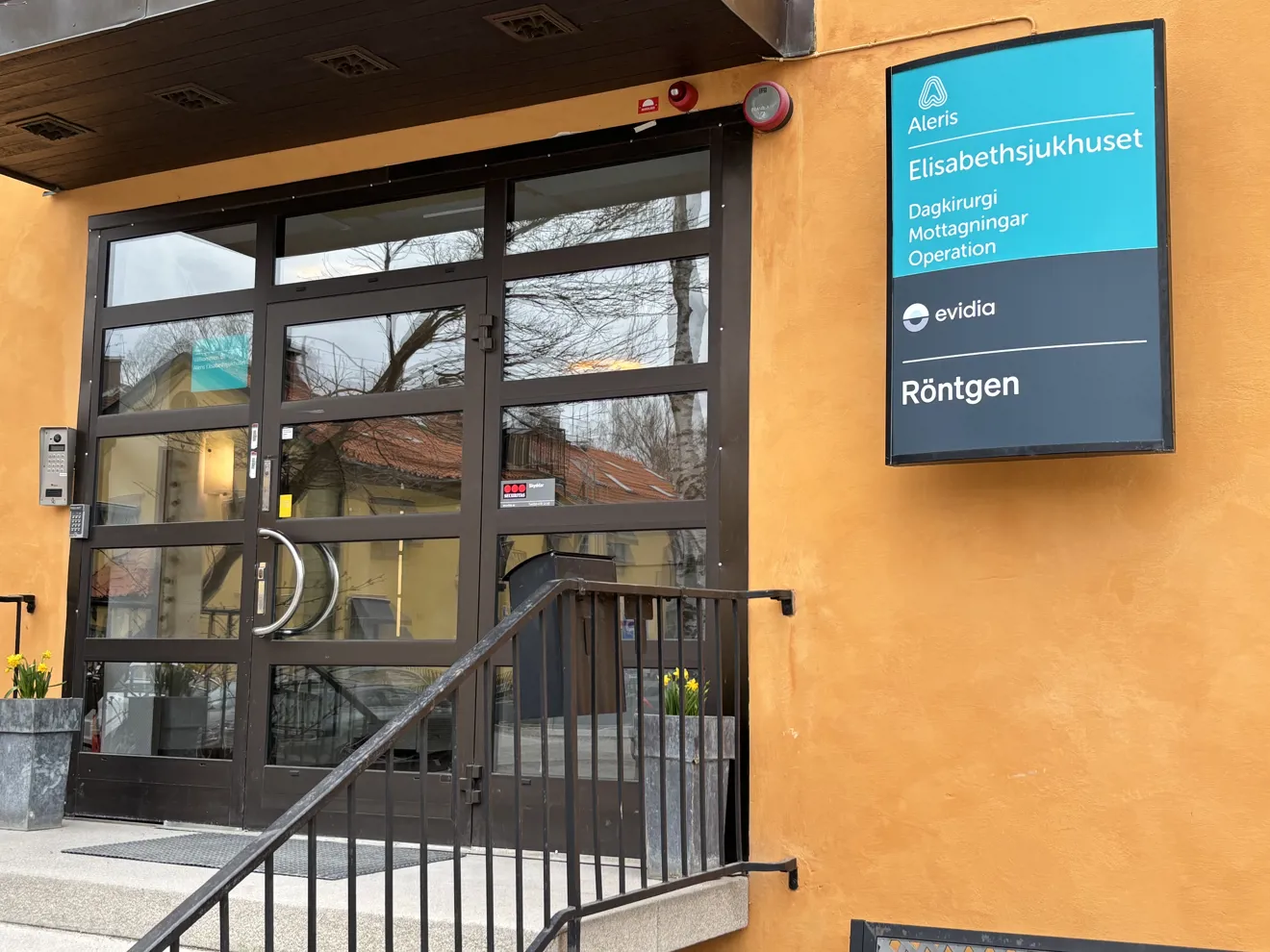
Evidia Uppsala at Elisabeth Hospital X-ray

Geijersgatan 20
752 27 Uppsala

FAQ

Frequently asked questions about skeletal changes and MRI

Can whole body MRI show skeletal changes?

Whole-body MRI can show certain changes near the skeleton and signals in bone marrow or soft tissues. In case of local complaints, a targeted examination is often more detailed.

Are all skeletal changes serious?

No. Many skeletal changes are benign, age-related or strain-related. Radiological assessment and medical review help determine if follow-up is needed.

When should I choose targeted MRI instead?

Choose targeted MRI if you have clear problems from a specific area, such as the knee, hip, shoulder or back.

Do I need a referral for a full-body MRI?

No. You can book a full-body MRI privately through Prevcare without a referral.

What do I do if I suspect a fracture?

If you suspect a fracture or acute injury, you should seek medical attention immediately. A full-body MRI is not an emergency examination.